

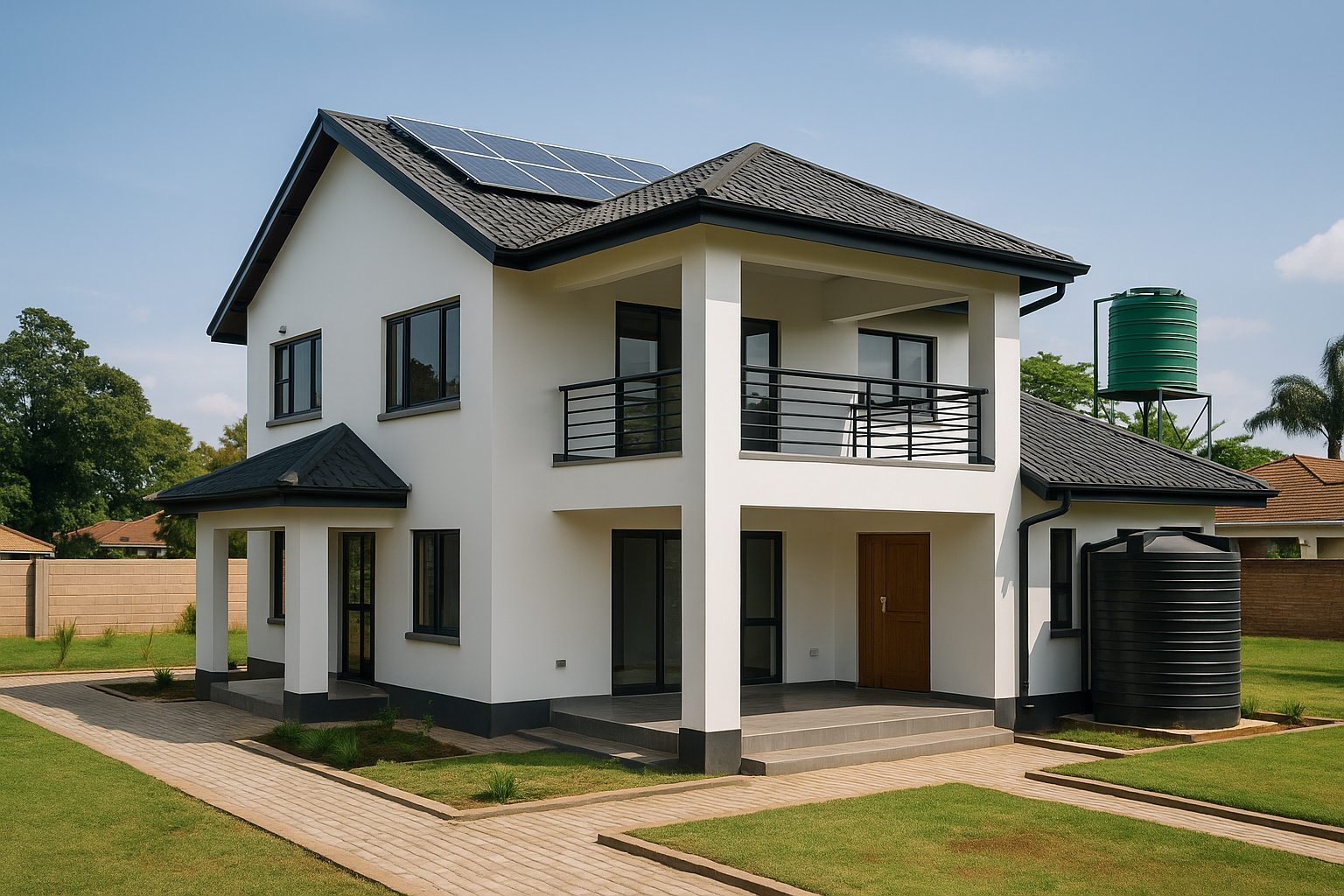
A 2025 Guide to Cost-Efficient, Loadshedding-Resistant Homes
By Coach Brian
Lusaka’s skyline is rising, brick by brick. But today’s builder faces more than just architectural challenges. The modern Zambian homeowner must wrestle with electricity shortages, inflated material prices, and an urban housing market that punishes poor planning. In 2025, building a home in Lusaka isn’t just a construction project. It’s a strategic exercise in sustainability, resilience, and financial wisdom.
Every decision made on-site has ripple effects. A poorly chosen roofing material can triple your indoor heat. An overlooked electrical design can turn loadshedding from an inconvenience into a crisis. The good news is that with the right guidance and mindset, you can build a home that stands firm in both structure and strategy.
One of the first decisions any homeowner makes is where and how to build. While large plots might seem appealing, they also come with large costs. The smarter approach is to build vertically. A well-designed double-storey home allows you to use less land while gaining more space. This also leaves room for critical utilities such as solar panels, a water tank, and even a shaded outdoor area. In a city where land prices continue to rise, space efficiency is your first financial win.
Once your land is secured, the real game begins: designing a house that thrives regardless of the national power grid’s mood. Solar prewiring is no longer optional. Even if your budget doesn’t allow for full solar installation immediately, pre-installing the necessary conduits and connections will save you time and thousands of kwacha when you eventually do. It’s a small decision today that eliminates big regrets tomorrow.
Next, rethink how your house breathes. Natural light and cross ventilation should be baked into your architectural layout. Large, strategically placed windows, open-plan interiors, and proper orientation can reduce your dependency on artificial cooling and lighting. It’s sustainable living by design.
Wiring your home with two electrical circuits, one for essentials like lighting, Wi-Fi, and refrigeration, and another for non-essentials, gives you the flexibility to use solar or inverter power only where it counts. This is the kind of wiring logic that separates a resilient home from a reactive one.
Don’t stop there. Embrace gas wherever possible. A gas stove and geyser are not just efficient. They’re unaffected by power outages. In a Lusaka household, gas is no longer an alternative. It’s insurance.
Material selection is another area where smart choices make a real impact. Aggregate costs can eat into your budget if you’re not careful. Buying quarry dust, sand, and stones in bulk, especially when coordinated with other builders in your area, can lead to major savings. Timing and collaboration can unlock discounts and reduce transport overheads.
However, no cost-saving strategy works better than having a proper Bill of Quantities from the beginning. The BOQ is not a luxury. It’s a necessity. Too many homeowners dive into construction based on vague figures from well-meaning relatives or handymen. A professionally prepared BOQ gives you a roadmap of your entire build, breaking down every item, quantity, and cost. It prevents the dreaded mid-project money drought and gives you full control over your resources.
While everyone focuses on energy, very few think about insulation. In Lusaka’s hot seasons, a poorly insulated home is a furnace. Insulation materials such as polystyrene or reflective foil beneath your roofing sheets can slash indoor temperatures significantly, reducing the need for expensive cooling systems. Install solid-core doors and seal your windows well. The results are better acoustics, better temperature control, and a more peaceful home environment.
Water, often taken for granted, can become a crisis during shortages. Build for that reality. A water storage tank should be part of your blueprint, not an afterthought. Design it into the structure at foundation stage so it integrates with your plumbing system. Complement that with dual-flush toilets and water-efficient fixtures that reduce waste without reducing comfort.
Security in modern homes doesn’t need to look like a prison yard. Prewire your house for smart security systems: CCTV, motion detectors, and alarm triggers. Doing this before plastering is cheaper, neater, and far more effective than retrofitting. You can even connect the system to your mobile phone for full control from anywhere in the world.
Smart switches and motion sensors are no longer a tech enthusiast’s toy. These tools help manage energy usage, increase convenience, and provide peace of mind. With a tap on your phone, you can turn off forgotten lights, control your gate, or monitor who just rang your doorbell.
In closing, the best advice you can follow is to build not just for now, but for the next ten years. Think long-term. Choose durable finishes. Leave room for growth. And above all, partner with qualified professionals. A cousin with a toolbox is not a strategy. A certified architect, quantity surveyor, and contractor is.
At Timange.com, we understand the real landscape of construction in Zambia. We connect you with the right professionals, quality suppliers, and cost-saving opportunities to make sure your building journey is smooth, sustainable, and smart from start to finish.
Your dream home is possible. Just build it with purpose.